The biggest challenge I had was figuring out how to make my Art Review read more like a review and less like an encounter. I wanted to add a lot of detail to make my audience feel as if they were experiencing the Art themselves, but was challenged to find the wording to make it sound like a review. I read multiple reviews for reference but still feel as though I’ve come up short on the assignment. I was surprised to realize that I enjoyed completing the research for my projects and the smaller weekly assignments because it gave me an opportunity to learn and expand my knowledge on things that I may not have already known. An example of this was with my research on Boris Artzybasheff and his graphic work. As stated in my project, I didn’t really know who he was or what his work was when I attended the lecture at the SUArt Galleries. Researching him as an artist and the work he did allowed me the opportunity to understand the meanings behind his artwork. I was also able to learn more about the use of Propaganda during times of war such as WWII. These experiences are important to my development as a research writer because they allow me to learn and continuing expanding the skills learned during the semester. In the future, I will be able to fall back on information learned, such as how to search the library’s databases for scholarly articles to help back up arguments I may be trying to make.
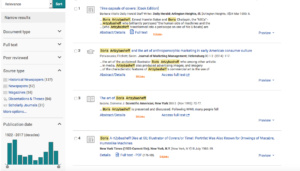
Screenshot of a ProQuest Database search on Boris Artzybasheff
Research and writing impacted my engagement, interest, and understanding as I worked with the Encountering Arts inquiry in that it forced me to look at Art more critically and with purpose instead of just for aesthetic purposes. Before taking WRT 205, I would encounter Art for the sole purpose of seeing it. Now I am able to experience Art with the intention of thinking deeper about its meaning and what the artist wanted to draw attention to with it. An example of this is the New York State Chinese Lantern Festival. It would be simple for me to attend with the intent of simply enjoying the displays. Instead, I had the foresight to research the event, what it took in order to set up the displays, and the importance of the festival in the Chinese culture. Afterwards, I researched the importance of the various themes I noticed throughout the festival and the importance of them in the Chinese culture.
The project that I hope others will read and be influenced by is my Unit One project: Researching & Analyzing an Arts Experience that I submitted on Boris Artzybasheff. This was by far, my favorite project that I submitted because his work was so unique and I enjoyed learning how his work was used as propaganda during war times and the technological era. The Interviews that we read throughout the semester were most influential and helpful to me and my work as a research writer as I prepared for my interview with Marge Thomas and her work with the Children’s Glassworks Theatre. Reading the different interviews allowed me to see many different styles and formats that others have published. I was also able to get an idea of the types of questions to ask and how to make them flow well. Many of the interviews that I read were in a blog format, which is the formatting that I chose to use as well. I was able to mimic ideas that I liked from the interviews in order to use in mine.
This semester was the first time that I have taken a class where I have really learned or needed to complete research for any assignments. As I progress through coursework towards my degree, I image there will be many classes where the practices I’ve learned will benefit me as I need to read and complete research for papers and assignments. Completing database searches in order to find scholarly works that will support any arguments that I may make in my writing will be beneficial so that I have critical engaging examples to use. I will also use the practice of completing summary heuristics in order to examine texts more critically. This practice will help me to dissect the texts in a way that will allow me to find the authors’ purpose for writing them.
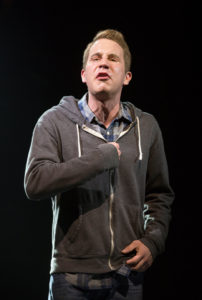
The first summary heuristic that we completed in class was for a review written in The New York Times of Ben Platt’s leading role in the musical “Dear Evan Hansen.” This assignment was meant to help us dig deeper into our readings and examine the texts we were reading. This assignment made me really analyze the texts I read and try to see what the author was saying without saying it. I chose my summary heuristic on Joel Lovell’s review because it gave me a desire that I’ve never had before, to see a Broadway performance, which I attribute to Lovell’s talent of making his audience feel that they are experiencing the musical and his interactions with Mr. Platt, first hand.
Ben Platt in “Dear Evan Hansen”
“How a 23-Year-Old with Mild Anxiety and a Charmed Life Became the Lying, Sobbing, Lovesick Toast of Broadway,” written by Joel Lovell is about the actor, Ben Platt and his role in the musical “Dear Evan Hansen.” In his text, Lovell describes the strengths that the actor has in order to give an emotionally intense performance for 8 shows a week. Lovell’s text was published on May 10, 2017 on The New York Times website. This piece also appears in print in the New York edition. Lovell’s piece can be considered to be a biography because he is writing about the actor, Ben Platt who plays the lead role in the musical “Dear Evan Hansen. It can also be considered to be a review of him as an actor and his performance in the musical because in this text, Lovell goes into great detail to describe Platt’s performance and what it takes for him to perform as intensely as he does.
The audience that Lovell is targeting with his text are those interested in the arts, specifically those interested in large scale theater or musical productions. Those interested in this particular production that may want to know more details about the lead actor or his prospective on playing this role may also be an interested in the text. The timing of Lovell’s text is opportune because it was published approximately ten days after the 2017 Tony Award nominations came out. With the awards-ceremony still approximately a month away and the show receiving 9 nominations, there is still time for readers to go see the show before the Tony Awards.
The author illustrates what Ben Platt puts himself through in order to give a top-notch performance, every time. Lovell attempts to make his audience feel the toll that this role takes on Mr. Platt mentally, emotionally, and physically. He does this by explaining in depth, the actor’s routines to prepare for each performance along with the routines he follows to assist his recovery from each. He also details conversations that he has with those closest to him, such as his mother and co-stars and their concerns for his well-being and the awe they have for the amazing job he does in his role.
One of the key points that circulate in this text is the mental and emotional strength that it takes for Mr. Platt to perform this role as flawlessly as he does, and the reactions of those that witness it on a daily basis. In the following quote, Steven Levenson, one of the three creators of the show, appears to be in awe of Ben Platt and his performance. “I’ve never met an actor who has such emotional access,’ Mr. Levenson said. ‘Yet every night, as intense as the role is internally, he hits each moment exactly the same. He’s technically perfect, every time. I find it a mystery. He really is a unicorn.”
The actress that plays the role of Evan’s mother, Rachel Bay Jones, is also mystified by the actor’s ability to perform so intensely and passionately. “When I spoke with Ms. Jones, she said: ‘I don’t really know how he does it, especially at such a young age. We all have those parts of ourselves we don’t find attractive and don’t want to show thousands of people. It takes so much work to strip away our protections around those things. But he’s able to let his guard fall away so naturally, and just be.”
The strong commitment and dedication Platt has to his role along with to those that come to see the musical can be seen as he describes the “monkish” lifestyle that he leads while performing in “Dear Evan Hansen.” An example can be seen in this quote: “It won’t always be like this, ‘he added. (His contract is up in November.) ‘But I feel as long as I’m doing this role, everything I do has to be in the service of that. I don’t want there to be a single performance where people leave feeling like they didn’t get the best I could offer. If that means denying myself something, that’s O.K. I don’t think anything can be genuinely fulfilling or powerful if it’s not taking some kind of toll. For now, I’m definitely willing to let that toll be taken.”
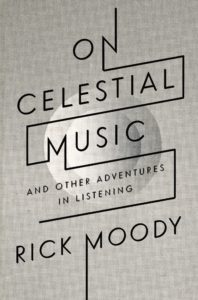
I chose my summary heuristic for Guilty Pleasures, a chapter from Rick Moody’s book “On Celestial Music and Other Adventures in Listening,” because the formatting of the text was initially difficult for me to understand. A lot of the text was written to mimic a string of email conversations which was at times, confusing to follow. Writing a summary heuristic for Moody’s chapter helped me to see beyond the email conversations, and allowed me to examine the author’s meaning behind the text.
Guilty Pleasures, a chapter from the book “On Celestial Music and Other Adventures in Listening,” written by Rick Moody is about an event that the Brooklyn Record Club (whom Moody is a member of) is planning to put on where each member is required to bring two musical selections that they are ashamed of liking. The author uses saved email conversations between the members to outline the event and the feelings that bringing such selections invite. The book was published in New York on January 1, 2012, by Back Bay Books- a subdivision of Little, Brown and Company.
This chapter can be described as a personal narrative because Moody writes about an event in a story format that happened in his life. His primary audience are readers with a broad appreciation for music. This is apparent by the depth the author goes into while describing the various musical genres throughout the chapter. His secondary audience might be those faced with having to make decisions that may cause discomfort, which can be recognized throughout the chapter as Moody discusses the difficulty he has deciding on which songs to bring to the Guilty Pleasures event.
In this piece, Moody is being nostalgic as he discusses music from his past and the feelings it incurs. Moody uses both ethos and pathos to convey his purpose. He uses ethos to show the creditability of his vast knowledge of music. One example of him doing this is when he writes about working at a radio station during one point of his life: “I worked at the radio station when I was in boarding school. I may even have been the program director of the school radio station,” (Moody, 149). He uses pathos to appeal to the audience’s emotions and values. This is done by showing how difficult it was for him (and other members of the Record Club) to decide which tracks to play during the Guilty Pleasures event. He also talks about his sense of nostalgia when picking the Jethro Tull track, which was in part inspired by his late sister’s fandom of Tull.
One concept that resonates within the text is nostalgia. This can be seen throughout the chapter as Moody discusses various music that he and the other members liked at specific points of their lives. One example was in JL2’s email message that she sent after FT had stated that “We Built This City on Rock ‘n Roll” would always be an abomination: “I remember performing ‘we built this city’ on WFMU in the mid eighties. Everyone was smiling broadly and there was a general vibe that it was the best part of the evening.”
A second example can be found as Rick Moody discusses how he took possession of some of his late sister’s CDs after she passed away. In the chapter, he states that she was a fan of Jethro Tull’s live album, Bursting Out. “I’d never much liked Bursting Out back when it was released, but when it was my late sister’s album, it suddenly seemed worth another listen.” Moody continues by saying that listening to that album made him want to listen to other albums from Jethro Tull’s earlier years.
Another concept that can be found within the chapter are concerns of feeling insecurity, discomfort, and embarrassment. One example of how this is felt is when Moody discusses how the two selections he brought to the first Record Club meeting that he attended (songs from Meredith Monk and Captain Beefheart), did not translate his musical tastes the way he had hoped. Moody states: “The Beefheart debuted first, and I was red with embarrassment and anxiety, my head actually in my hands throughout its performance.” He goes on to say how the Guilty Pleasures event provoked the same insecurities and discomfort: “playing really awful stuff in front of very accomplished persons, many of whom I not only like personally but also admire, was difficult.”
Moody ends the chapter by saying that choosing the tracks that he did, indeed caused himself discomfort before and after the event, but as time passed he was able to move past feeling awful about it. The circulation of this piece, at this time during our class is opportune because we may be feeling insecure or uncomfortable about sharing our writing as we prepare to write about our first arts experience. Moody’s chapter helps us to see the importance of sharing our experiences despite our insecurities and feelings of discomfort, and the courage it takes to do so.
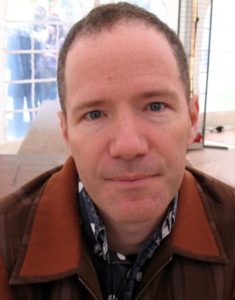
Author of “On Celestial Music and Other Adventures in Listening,” Rick Moody
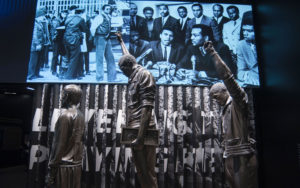
Another smaller assignment that I’m including in my portfolio is entitled: “Ringing the Freedom Bell” & Source Ideas. This assignment was intended to help us think about sourcing and research for our Arts Review. Our assignment required us to think about the kind of research Erica Armstrong Dunbar was required to do and the sources she may have used to write her article: “Washington’s New African-American Museum Shows How Black History Shaped the American Experience,” which was published in The Nation. Initially, I was planning to review my experience of watching a local children’s theatre’s performance of “Snow White and the Seven Dwarfs,” so I discussed the kind of research I could do. Later, I chose to review a different experience.
National Museum of African American History and Culture, Washington D.C.
“The bell, which dates back to 1886, was owned by the First Baptist Church in Williamsburg, Virginia, a congregation founded by enslaved and free blacks in 1776. The same year that the founders of the new nation signed the Declaration of Independence, members of the First Baptist Church defied the law by congregating and worshipping in secret outdoor church services. It seems that in 1776, the spirit of freedom was contagious.”
In Dunbar’s article, she discusses how President Obama spoke at the opening of the Smithsonian’s National Museum of African American History and Culture. After his opening remarks, the President, first lady, and Ruth Bonner would then ring the Freedom Bell together. Dunbar most likely researched the history of the Freedom Bell and the origins of the First Baptist Church using historical documents maintained by the First Baptist Church or the municipal of Williamsburg, Virginia.
“Once inside, the visitors are captivated by what they see. They move slowly and judiciously through the multilevel structure, carefully reading the descriptions for each object. They match images and items to family stories passed down from one generation to the next. In many ways, this museum validates what these visitors have always known to be true. The experience is both educational and emotional, and the patrons refuse to be rushed. The typical time spent in a museum is close to two hours, but the people who visit here are staying for much longer, sometimes for up to six hours. They photograph themselves in front of exhibits that are particularly moving or triumphant; they fall into silence when they ponder a set of children’s shackles.”
Dunbar could have performed both primary and secondary research as she speaks of the visitors and the amount of time spent inside of the museum. It’s possible that she witnessed the visitors as they traveled throughout the museum, noting their reactions to the exhibits and interactions with one another. Dunbar links to an article on NPR which suggests that she used it as secondary research.
While reviewing my experience of a performance of “Snow White and the Seven Dwarfs,” a play recently put on by the Children’s Glassworks Theatre, I would research the history of the theatre and the decommissioned church that the theatre is housed in. It’s owned by the Cleveland (NY) Historical Society so I could reference historical documents that the village has on file. I could also speak with members of the Cleveland Historical Society, as they have lived in our village for many generations and would be a wealth of knowledge.
In the evenings between April 14 and June 24, 2017 hundreds, if not thousands of people flocked to the NYS Fairgrounds located in Syracuse, NY in order to attend the New York State Chinese Lantern Festival. The purpose of this event was to bring awareness of the Chinese culture to the residents of Upstate New York. The event allowed its visitors of all ages an opportunity to experience a culture that is new or different to the one that they live in.
The actual Chinese Lantern Festival traditionally takes place at the end of the Chinese Spring Festival (aka the Chinese New Year Festival), on the night of the first full moon of the Chinese calendar (typically in February or March). The Chinese New Year Festival is considered to be the most important festival because it symbolizes the reunion of family as spring returns. As us “Upstaters” know, New York is usually cold and snow covered during this time which makes it nearly impossible to display the lanterns outside on the fairgrounds. For this reason, the exhibit ran from April through June, allowing visitors 2 months of warmer, less snowy weather to attend and appreciate the history behind the larger than life lanterns. The festival consisted of more than 30 lit up displays aligned along a mile-long path around a small pond that attendees could walk, take photos, and read informational placards in order to learn more about the significance of some of the lantern displays. It took months for the artisans from Sichuan, China to make and assemble the lantern displays at the Fairgrounds. Along with the lanterns, there were also nightly stage performances that consisted of acrobatic contortion, plate spinning, and face changing. On June 21st, two of my daughters and I headed out to the Fairgrounds, in Syracuse to attend the Festival. Arriving around 8:30 in the evening still allowed enough daylight to watch the stage performances but late enough to enjoy the sculptures fully lit up in the dark. Driving into the parking lot, it was impossible to miss the huge 200-foot lit up orange dragon that appeared to be swimming in the center of a pond. Along the outskirts of the pond, dozens of other lit up animals such as penguins, elephants, and giraffes could be seen. The festival greets its guests as they pass under a giant red welcome gate that resembles a traditional Chinese building. Along with the bright red columns, the gate was decorated with brown, yellow and teal-green designs. Once passing under the welcome gate, visitors walk beneath a corridor of white lanterns with orange foliage painted on them, hanging from rings of purple lights intricately woven into whimsical circles. When walking through this beautiful corridor, it feels as though you’re about to be transported to another world. A colorful field of vibrantly lit decorations lay on the other side of the magical corridor that make it difficult not to get excited about. The mammoth dragon centered in the pond was definitely the largest attention grabber. It’s bright orange body with fire red scales beckons visitors to come to the edge of the pond to see it. To the left of the entrance lays a stage with benches placed in front for audience seating where the nightly acrobatic or plate spinning performances occur.
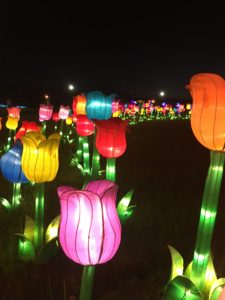
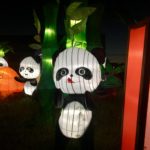
The one mile long path around the pond consists of a colorful menagerie of brightly lit animal shaped lanterns. These whimsical animals included giant elephants, panda bears, fish, zebras, giraffes, and tigers. Along with the animals, there were lantern gardens of tulips, roses, and cherry blossom trees. All of the lanterns contained meaning within the Chinese culture, which could be read on the informational placards that were posted alongside each lantern display. These placards discussed the item on display, its historical value, and it’s meaning in and importance to the culture. Although there were signs posted to stay on the path it was not enforced, making it easy for curious people (such as myself) to walk up to the lantern displays in order to get a better look at the lanterns or to take photos with them. To my surprise the lanterns were made out of a heavy, transparent, vinyl material and sewn together with an upholstery grade thread.
To help visitors immerse themselves deeper into the culture, there were Chinese food concessions onsite that offered delicious foods such as dumplings, teriyaki, and eggrolls. Artisans also had vending booths set up, selling authentic paper lanterns and stars, fans, and parasols. There was also a booth where guests could get their names written in traditional symbols.
The most prominent theme noted throughout the Lantern Festival was the use of animals and fish throughout the displays. Each animal used held important meaning to the Chinese culture. One example is the use of fish and other sea life creatures. So much of the traditional Chinese culture relied on fishing for survival which made their representation important. The pronunciation of fish in the Chinese language is the same as “surplus” which meant people could have wealth and food for the upcoming year. Another example is the use of the dragon which was important because it represents a spiritual symbol of all Chinese people that ties the entire Chinese nation together.
The intention of the festival organizers was to share the Chinese culture and traditions with the public who may not otherwise have the opportunity to do so in such a realistic environment. The organizers did a great job of doing this by posting informational placards about the importance of each specific display along with its meaning and importance to the culture next to the various lanterns for people to view at their leisure.
I enjoyed attending the Lantern Festival because it allowed me the opportunity to learn about and deeply experience a culture different than my own and I believe that other festival goers would find the same experience. The festival did a fantastic job of educating its visitors by providing informational placards next to each lantern display, along with including authentic food vendors and artisans. Anyone that enjoys learning through visual representation or those who just enjoy experiencing new or unique things would enjoy walking the festival, taking in all of the larger than life exhibits. The New York State Chinese Lantern Festival isn’t just for those yearning to learn more about the Chinese culture. People of all ages will enjoy getting lost in the beautiful lit up displays.
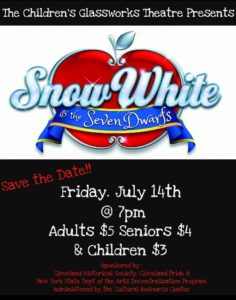
On July 14th, I attended a rendition of “Snow White and the Seven Dwarfs,” put on by the Children’s Glassworks Theatre in Cleveland, New York. The Children’s Glassworks Theatre is a free program where children ages six to sixteen can perform in community plays directed and produced by local resident, Marge Thomas. This program allows children to gain experience in performance arts and set designing that they may not otherwise have.
The hot and humid day led into a hot and sticky evening. Knowing that the 7:00 pm performance would be packed, my husband, daughter, and I pulled onto the normally quiet street that the decommissioned St. John’s Episcopal Church resides on a half hour before the play was scheduled to begin. The street was already packed with cars parked bumper to bumper along both sides, making it difficult for any passing traffic to get through. The yard surrounding the church where the theatre is housed was also completely full. Luckily, we were friends with a neighbor and parked in their driveway. As we walked up to the church, we were greeted by other community members saying hello and asking how we were doing. Everywhere you look, people were laughing and hugging as if they haven’t seen each other in years, even though most of them see each other on a regular basis in the grocery store or at church.
St. John’s Episcopal Church, Cleveland, NY
The sun beating down was hot and the air was thick with humidity. Even though the line was short to get into the building, where we would purchase our tickets, it felt like it took forever to get inside. The entrance into the church allowed little shade. Upon entering the church to purchase our tickets, we realized that although we would escape the heat from the sunshine, we would not do the same from the humidity. St. John’s church was built just after the Civil War, its high-pitched ceilings not conducive for heating and cooling the space. Inside the sanctuary, where we would sit to watch the performance, rows of the original pews lined both sides of the room with a red, carpet runner creating a pathway up the middle between the pews leading to the former pulpit where the stage had been constructed. The room smelled old and stale, which was assisted by the lack of air flow and humidity. Props could faintly be seen on the darkened stage. The pews were almost completely full, so we found seats towards the back of the room. Our seats didn’t allow for the best viewing, but I had hoped it’d do.
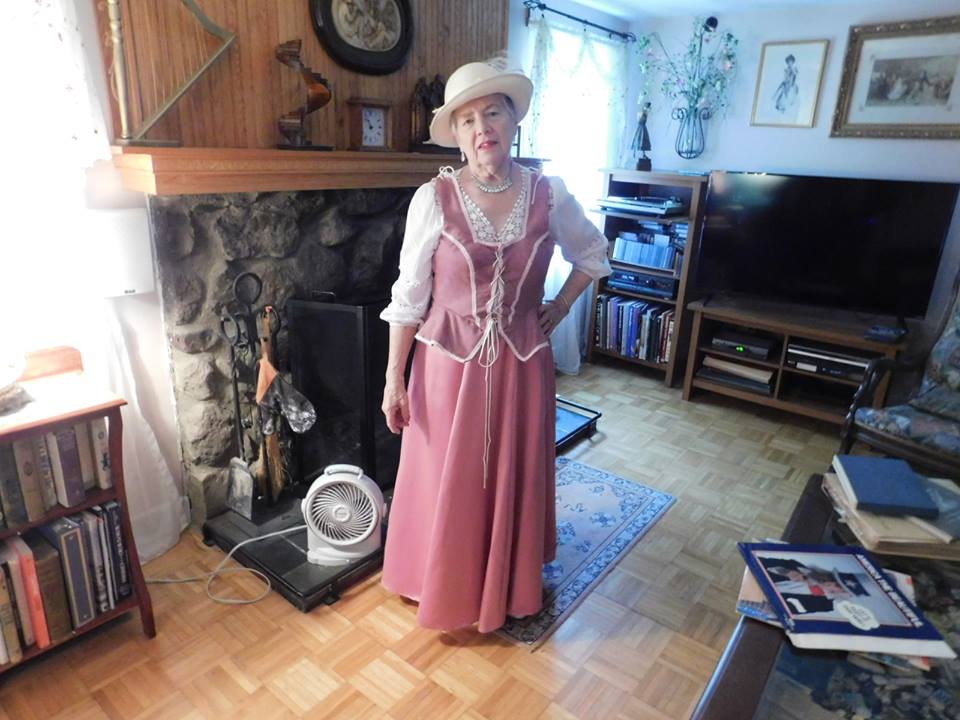
At 7:00, the lights lit up the stage and Marge Thomas appeared in a pink and white long dress with matching vest and hat. The dress appeared to have ruffles and lace, and reminded me of a dress that women might have worn in the 1800s. Although she must have been roasting in her dress, Marge appeared to be as cool as a cucumber. She opened the show by thanking everyone for attending and apologizing for their being no air conditioning. She also offered cushions for anyone that was interested, as the pews were very hard. Marge then explained that the theatre was started and hosted by the Cleveland Historical Society in 2004 in order to bring the Arts into the children’s lives. Marge also spoke of how many of the plays that did were considered to be fractured fairy tales. After she thanked everyone again, the stage went dark.
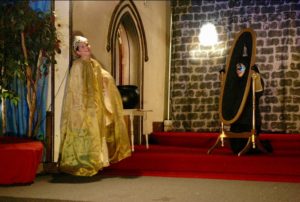
One red spotlight lit up the right side of the stage as a young girl dressed in red, wearing piggy tails in her hair began to quickly tell the story of “Snow White and the Seven Dwarfs.” When she finished her lines, the light changed to blue and another piggy tailed girl in blue stood up and continued with the opening narration. The light changed color a third time, to green and a third young narrator stood up in a green shirt wearing matching piggy tails. When the narrators finished, the light turned off for a moment before illuminating center stage where a tall, oval, swiveling mirror stood alone. A young girl dressed in dark robes loudly says in a shrilling voice “Mirror, mirror, on the wall. Who’s the fairest of them all?”
A content queen being told that she is the fairest in the land.
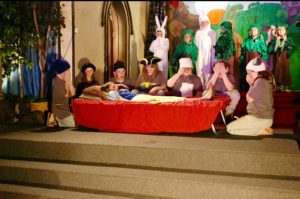
As we sat on the wooden pews, we watched the children of the Glassworks Theatre, regal us with a story of a young princess whose mother passed away, leaving her father to remarry so that she would have a mother. Although it is never said in this version of “Snow White and the Seven Dwarfs,” her father is absent, presented to have passed away as well, leaving the princess to live as a servant for the queen. The queen is content with being the “fairest in the land,” according to her magical mirror…. until one day when the mirror admits that princess Snow White is much fairer than she is. The queen goes into a jealous rage, ordering a huntsman to kill the princess, bringing back her heart as proof. The huntsman guides Snow White into the woods but is unable to carry out her death. Instead, he begs her to stay in the forest and returns with a sealed box containing a rock. The mirror agrees to never tell the queen that Snow White still lives. Snow White finds solace living deep in the forest with seven miners. As they work in the diamond mines all day, she cooks and cleans for them. She finds comfort in the friendships she made with the forest animals. As the play continues, a prince sees her playing with the animals and becomes enamored with her. The mirror slips and lets it out that the princess is still alive. The furious queen tracks down the princess and tricks her into eating a magical apple that puts her into a deep sleep.
Mourning Snow White’s deep sleep.
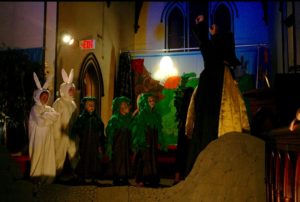
The miners and prince find her sleeping and the animals tell them what happened. They track the queen down and scare her into falling off a cliff. The queen’s death instantly releases Snow White from her deep sleep. The prince asks her to marry him. The play ends as the prince and Snow White are saying their vows. As she is asked if she will marry the prince, Snow White yells “NO WAY” and runs own the isle. As she runs away, the lights go dark and the play ends. The room is filled with a thunderous applause as the lights come back on.
The queen meeting her demise.
Before attending the performance, I had the pleasure of interviewing Marge Thomas on her volunteer work with the Children’s Glassworks Theatre. I feel that interviewing her prior to the play, gave me an insight as to why she devotes so much of her time to the theatre. This allowed me to truly appreciate both the production seen on stage, but also all of the workings behind the scenes that most people don’t realize happen.
You wouldn’t know that it was a cool and dreary day when stepping into the high school cafeteria. There was a loud chatter of people everywhere that warmed the atmosphere. The room was packed with family members, friends, teachers, and community members- all looking at student artwork. The lunchroom no longer looked like a lunchroom. Instead, it was transformed into a makeshift gallery. six by four foot black felt boards lined the walls. Each board contained dozens of student artworks that ranged from pencil and charcoal drawings to chalkings and paintings. There were tables set up with countless sculptures of metal and ceramics. Other tables were layered with photographs of flowers, sunsets, various objects like pencils and crayons, people and animals. It was exciting to see all of the students’ art work on display for all to see. Above the crowd, I could hear a familiar high pitch laugh. Without seeing her, I knew exactly where my niece was- I’d know her giggles anywhere. I followed the sound of her voice and found myself standing in front of a six foot tall black felt board with a dozen and a half pieces of art, and my niece beaming from ear to ear. This is exactly what I came to see!
For as long as I can remember, my niece Kelsey has been a talented artist. She began by drawing people, animals, and buildings. As she grew up, she began dabbling with charcoal and paints. Kelsey has always had a love of animals, so it’s no surprise that a lot of her artworks are of animals. A few weeks ago, Kelsey graduated from high school with the plan of attending college for Veterinarian Science. For this reason, her course load has always been full of Science and Math courses, but she always found a way to include an Art class or two into her schedule.
One of her final Art classes was her Senior Portfolio class where she spent most of the class creating art that she wanted to do in the mediums that she was most fond of. The final project would consist of a portfolio of her favorite pieces along with any that her instructor favored. The class would then put their portfolios on display for the public to view.
In front of Kelsey’s board, on the floor lay a two by three foot piece of white canvas. On it, a scene of brown and green rolling hills with a beanstalk flowing from the corner, surrounded by white clouds. It was a scene from Jack and the Beanstalk. The piece was designed from the perspective of the giant looking down on Jack as she climbed down to the country side. At first glance, the canvas looked to be painted but after closer examination, I realized that it was a digital rendition of one of her paintings. As it turns out, Kelsey originally drew this design for the school’s Varsity Winter Guard team to use as their floor mat for their performance of Jack and the Beanstalk. I had seen the larger, full size version of this during their performances but never knew she had designed it. Seeing it and putting it together blew my mind!
The board itself had a colorful array of some of Kelsey’s favorite art pieces. In the top corner was her name written in bubble letters, filled in with intricate colored designs of flowers alongside a self-portrait of herself, drawn out in pencil and charcoal. Her ability to shade in even the smallest details such as her eye brows and eye lashes down to the light reflecting from her necklace was amazing. Another self-portrait was displayed in the opposite corner. This one drawn in oil-based chalk was of her and the rifle she spins during Winter Guard performances. Half of her face is hidden behind the butt of the bright white riffle, but looking in her eyes it’s clear that she is smiling. A pencil drawing of a broken light bulb was displayed below a portrait of a girl with long brown hair putting on stage makeup. As I looked at this painting, I noticed the smallest details that Kelsey managed to include, such as the girl’s stray curls in her hair and the wrinkles in her sky blue shirt. Mindfully scattered on the board were pictures of different animals that Kelsey drew. Elephants, leopards, dogs, and wolves; but the most prominent one was of a tiger. The orange, white, and black face took up the entire piece. Its stripes perfectly spaced around his nose and bright green eyes that pulled you in and held your attention. If you stared for too long, you could easily forget that you were looking at a piece of 8 by 11 card stock and water colors. Viewing her display, it was easy to see what Kelsey valued most.
Looking at my niece’s art work, made me realize how unfamiliar I am with the different kinds of mediums that she used. I was unaware of the color variations that could be made with water colors and colored pencils. This experience raised the “how” questions for me. How did she do that? How was she able to make her art work appear to have a reflection, with only using a pencil shading technique? How did she make her portraits look so realistic? Of course, I asked her these questions and her response with a huge smile that brightened the room was that she would be happy to teach me.
A.O. (Anthony Oliver) Scott, born on July 10, 1966 has been a film critic for The New York Times since 2000. He became the chief film critic after his predecessor resigned in 2004. Scott is a 1988 graduate from Harvard with a Bachelor’s Degree in Literature.
A.O. Scott uses humor and sarcasm in his (sometimes brutally) honest reviews. After reading quite a few of them, I’ve come to the conclusion that this is his signature style. This style works for him, because it keeps the reviews interesting and enjoyable to read. Throughout his reviews, Scott uses images and video clips from the movies that he’s reviewing. He also inserts links to other articles that he may have used for research and as context for his articles.
While scrolling through A.O. Scott’s reviews on The New York Times’ website, I intentionally searched for reviews of movies that I would like to go see, I like the actors in them, or was familiar with their prequels. The first review I read was for “Wonder Woman,” directed by Patty Jenkins and starring Gal Gadot as Wonder Woman. I’m interested in seeing this movie (and definitely want to do so on the big screen before it’s too late!) because I am a fan of super hero movies and finally having a movie about a leading female super hero is exciting. Right off the bat, Scott asks the same question I had been wondering myself: Is this going to be a continuation from her introduction in “Batman v Superman” or is Wonder Woman going to own this movie while kicking ass and taking names? I may not have seen the movie yet but I don’t live under a rock either. I have heard other reviews, so before reading Scott’s review I already knew the answer. Throughout his review, A.O. Scott gives background information for the movie along with some details (that I wish I hadn’t read), but does not really give the movie away… or at least not enough to where it was ruined for me. If anything, his review only made me want to see the movie even more.
The second of Scott’s reviews that I read was for “The House,” starring Will Ferrell and Amy Poehler, which was directed by Andrew Jay Cohen. Although I have seen trailers on television for this movie, I chose to read his review because I think Farrell and Poehler are funny actors and was interested in his take on this movie. In this review, I appreciate how Scott tells his readers upfront that this movie is not like other movies that Will Farrell and Amy Poehler have starred in. Although the movie is deemed as a comedy (and how could it not be with Farrell and Poehler in it?), Scott warns his readers by saying “Based on trailers and the durable, slightly stale charm of its stars, ‘The House’ might be mistaken for a genial, silly movie about nice people making questionable decisions. Instead, it is a dark, startlingly bloody journey into the bitter, empty, broken heart of the American middle class, a blend of farce and satire built on a foundation of social despair.” Ultimately, Scott ends his review on a positive note and offers a moral to the story tying the movie to today’s society. Before reading the review, I didn’t have an opinion on wanting to see the movie. If it played during a weekend when HBO was offering a free view, then I’d probably watch it. After reading the review, I still feel the same way. I may rent it from one of those $1.29 DVD rental kiosks at the grocery store but if I don’t see it, I’m sure I’ll survive.
“Pirates of the Caribbean: Dead Men Tell No Tales,” directed by Joachim Rønning and Espen Sandberg and starring Johnny Depp was the third movie review that I read by A.O. Scott. I feel that this movie series has long ago ran its course. I enjoyed the first movie, and possibly the second (it’s been so long since I’ve watched it that I can’t remember) but now feel like they’re beating a dead horse. I chose to read this review because I was interested in seeing if Scott felt the same way….and of course he did. The thing that I appreciate most in this review is A.O. Scott’s brutal honesty. His honesty though almost to the point of being mean, is humorous. I suppose that if you’re going to be that painfully honest about something, you should at least be funny about it. Scott begins his review by stating: “This review will be short and dismissive. The movie under consideration — ‘Pirates of the Caribbean: Dead Men Tell No Tales’ — is, by contrasts, long and punishing. Its pleasures are so meager, its delight in its own inventions so forced and false, that it becomes almost the perfect opposite of entertainment.” The remainder of the review reads the same way. Although it’s a movie that I never intend to watch, I enjoyed Scott’s humorous honesty in his review of this installment of the “Pirates of the Caribbean” movie series.
A.O. Scott, Chief Film Critic for The New York Times.
I’ve known Marge Thomas for many years. She has been a member of our community in Cleveland, New York (located on the North Shore of Oneida Lake) for almost 65 years; volunteering in our churches, the American Legion, the elementary school, and the Cleveland Historical Society. It’s difficult to walk around our little town without hearing about something that Marge has done for our community, so it’s no surprise to hear that she pretty much runs the Children’s Glassworks Theatre, single handedly through the Historical Society. The Children’s Glassworks Theatre is a free program for children between the ages of 6-16. Marge works with the children to help them enhance their acting skills so that they can put on various plays throughout the year.
I recently had the opportunity to sit down with Marge to talk about her involvement with the Children’s Glassworks Theatre. Arriving at her home on a warm Monday evening, I was greeted after my first knock on her purple front door by her husband, Dave. The sound of music from another time (maybe the 40s or 50s) played an enchanting melody from one of their antique record machines. After our hugs and kisses hello and asking how the family is doing, he leads me into his living room where Marge is waiting for me. She hugs me, and begins to tell me how it was the first day of her Drama Camp. Drama Camp is a week long program where the children of the cast spend their time perfecting their roles and the scenes for the upcoming performance.
As I look around the room, there are photos of Marge’s family- her children, her grandchildren, and the children of the community that she has adopted as her own scattered in every direction. Love is felt everywhere. She offers me a drink and a plate of cookies because “I look like I’m fading away to nothing.” I’ve learned a long time ago that you cannot say “no” to Marge Thomas. It is simply impossible, so I have no choice but to happily accept her delicious homemade chocolate chip cookies as I begin to ask her about the theater program and her involvement in it.
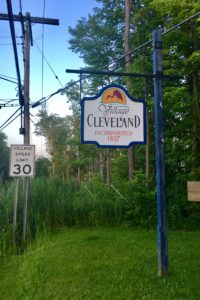
Cleveland Historical Society sign posted outside of St. John’s Church. (Cleveland, NY 2017)St. John’s Episcopal Church where the Children’s Glassworks Theatre is housed. (Cleveland, NY 2017)
What made you want to get involved with the Children’s Glassworks Theatre program?
The children. We live in a financially poor, rural area that doesn’t have a lot of things for kids to do outside of school. We now have a soccer league and a baseball and basketball league but not all children are athletic. I wanted to find something that all kids could do regardless of their athletic ability. A lot of parents work and don’t have the time or resources to do things with their kids, so the theater gives the children in our community something to do. It also opens them to an experience that they may not get otherwise.
How long have you been producing/directing these performances?
We’ve been producing plays since 2004. We’ve done Jack and the Beanstalk, Cinderella, The Legend of Sleepy Hollow, a derivative of The Wizard of Oz, and a lot more. There’s so many.
Do you direct and produce the plays by yourself?
Kristen, I’m good, but even I need a little assistance. My husband, David is amazing. He helps wrangle all of the kids. He has ideas, and helps with set designs. I also have one or two parents volunteer too. They help me direct the children and help them practice their roles.
How many children do you typically work with and are they always the same children?
I work with anywhere from 5 to 30 children. For a range of years, I’ll have the same children, until they get too old or become involved in other activities, but I always have new children too. Younger siblings tend to join the ranks. As the kids become involved and tell their friends, their friends join too.
Has there ever been a time where you’ve had to turn kids away because you didn’t have enough roles for all of them?
No child will ever be turned away. There is always room to fill. Sometimes, I’ll get creative and turn one character into a group of characters. In Cinderella, I needed mice so instead of 3 mice, we had 5 mice. I needed a pumpkin patch so I children acted as a pumpkin patch. The children also help with decorating sets. There is always something for everyone to do.
Have you ever had a year where you didn’t have enough children to perform a chosen play?
No. We’ve had years where we’ve only had 5 or 6 children, but I just give them extra roles. Not multiple BIG roles, but sometimes, I’ll have them be two different characters. Or I’ll just cut characters out, if they aren’t as important to the story line. You know this. Your daughter has performed a few times where she was a few different characters. That is always fun to see. It’s nice to see exactly what they can do and how far they can stretch their talent. Too many or not enough kids, I can improvise and make anything work.
What is your favorite part about directing/producing these plays?
I love working with the kids. They are my favorite part. I love the kids that have done it a few times and know what to expect and I love the kids that have never acted or performed before. Watching them realize that they can perform is wonderful. It brings joy to my heart.
What is the most difficult thing for you?
The hardest part is making sure that we have enough funding to put on the show.
How does it work? If it’s a free program, how do you obtain the costumes and set designs?
It’s a free program for the children, I would never charge them- but it’s not truly free. The Children’s Glassworks Theatre is sponsored by the Cleveland Historical Society. We are lucky enough to use St. John’s Episcopal Church as our theater. The church was decommissioned some years ago, and the Historical Society took it over. With the help of some of our community members, we were able to build a stage where the children perform and practice their plays. The Historical Society keeps the heat and lights running for us. We rely heavily on donations. Vella’s Hardware is always willing to loan us set supplies like boards and lumber. We try to not abuse them too much so that we can re-use them in the future or give them back. Costumes! Depending on the character, I ask the children to bring in specific items from home…. pants, or white dress shirt, a skirt or dress of a certain color. Then I’ll alter them a little to better fit the character. I’m a seamstress. I love to sew. If I need to, I’ll sew costumes.
What about the plays? Do they cost anything?
Oh yes…. there are copyrights that I need to pay for in order to use them. I apply for grants from Oswego County and New York State. Knock on wood, we’re fortunate enough to usually receive the grants I apply for. We also receive donations from community members. We live in a wonderful community that loves their kids.
How often does the Children’s Glassworks Theatre hold performances?
We have two performances a year. We do one in July. We hold open auditions in May, a few rehearsals in June and then a week long summer camp that runs from 10am to 4pm, with their show on that Friday night. We also have a performance in December that we start preparing for in the fall, meeting on Sunday afternoons.
How do you decide which play to put on?
It depends. Sometimes, people will contact me with suggestions and other times I go to Oswego County and ask if they have any plays that are available to use.
So you only use pre-written plays?
Not always. I have written a few plays that we have performed. There have been times that past performers have brought me plays that they have written as a project for school, that I’ve used.
What has been your favorite play to date?
It’s difficult to name a specific play. They’re like your children- you don’t have a favorite. You love them all equally.
You must have a few that you enjoyed more than others?
No…. but if I did, it might be Million Dollar Mystery at the Opera House. I wrote it… but that is not why I enjoyed it so much. I liked it because it was an interactive play. The audience participated because it was a mystery and they needed to solve the mystery. The children interrogated them. Accused them. They made them part of the show. It was thrilling! What I really liked about it, was that the children and the audience learned a little about Cleveland’s history. They learned about App’s Opera House… do you remember that? It was torn down almost 30 years ago, but the family that owned it back in its heyday ran an old fashioned projection theater out of it. People came from all over to attend. Cleveland has history and being able to teach the kids about it was wonderful!
There’s even history included in the theater itself. You know why it’s called the Children’s Glassworks Theatre, don’t you? It’s in honor of the glass making factories that used to be on Sand street. Cleveland was famous for its glass making companies until they were shut down in the early 1900’s because of industrialization.
I actually knew this, as it is a pretty big deal in our little village. Glass can still be found in the woods where the old factories used stand.
What’s the next play you’ll be putting on and when will it be?
The next play that the children will be performing is Snow White and the Seven Dwarfs on July 14th. It’s not the Snow White and the Seven Dwarfs that you know. It’s humorous….you HAVE to come and see it! I will not give anything away. If you want to know, then you need to come see it.
Before leaving with a plate full of cookies for my family, I promised Marge that I would in fact come see the Children’s Glassworks Theatre’s performance of Snow White and the Seven Dwarfs. How can I not? I need to see what special twist she has put into this story.
When I heard that the Chinese Lantern Festival was coming to the NYS Fairgrounds, I knew I had to check it out! Traditionally, the Chinese Lantern Festival takes place at the end of the Chinese Spring Festival (aka Chinese New Year Festival), on the night of the first full moon of the Chinese calendar (typically in February or March). The exhibit set up at the State Fairgrounds ran from April 14 through June 24, 2017 which allowed visitors 2 months to attend and appreciate the history behind the larger than life lanterns. The festival consisted of more than 30 lit up displays aligned along a mile-long path around a small pond that attendees could walk, take photos, and read informational placards in order to learn more about the significance of some of the lantern displays. There are also nightly stage performances that consist of acrobatic contortion, plate spinning, and face changing.
On June 21st, two of my daughters and I headed out to the Fairgrounds, in Syracuse to attend the New York State Chinese Lantern Festival. It was something that I had been wanting to do all Spring and with the festival ending in 3 days, it was now or never…. (or in August, when I heard that it may return for the NYS Fair). We got there shortly before 8:30 in the evening so that it was early enough to see any stage performances but late enough to enjoy the sculptures fully lit up in the dark. As we drove up to the parking lot, it was impossible to miss the huge 200-foot lit up orange dragon that appeared to be swimming in the center of a pond. Along the outskirts of the pond, dozens of other lit up animals such as penguins, elephants, and giraffes surrounded the dragon. It was a magical sight that took my breath away!
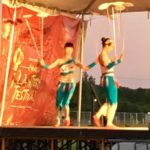
The festival welcomes you as you pass under a giant red welcome gate that resembles a traditional Chinese building. Along with the bright red columns, the gate is decorated with brown, yellow and teal-green designs. Once passing under the welcome gate, you walk beneath a corridor of white lanterns with orange foliage painted on them, hanging from rings of purple lights intricately woven into whimsical circles. When walking through this beautiful corridor, it feels as though you’re about to be transported to another world. A colorful field of vibrantly lit decorations lay on the other side of the magical corridor that make it difficult not to get excited about. The very first thing that grabs your attention again is the mammoth dragon in the middle of the pond. It’s bright orange body with fire red scales beckons visitors to come to the edge of the pond to see it. Before we could get pulled into its mesmerizing trance, we were distracted by the sounds of what I’d consider to be traditional Chinese music and the applause of an audience. To our left, was a brightly lit stage, surrounded by a crowd of people. On the stage were five dark haired, petite women dressed in teal and white bodysuits with their hair tied back into perfectly neat buns. Each woman held three long sticks in each of their hands with plates spinning on each one. At first, the performers spun their plates as they moved in a choreographed routine, walking around each other in various formations. Soon after, the women turned their dance into a tumbling routine as one performed slow summersaults while still spinning her plates. She then handed her plates to another performer and proceeded to climb onto the shoulders of two of the other performers as they spun their plates. It was mind blowing! The crowd loved it as they cheered louder and louder with each trick. I studied the plates as they appeared to wobble on the sticks. I thought that there was no way they were actually spinning these plates… they had to be attached and the performers were simply shaking the sticks to appear as though they were spinning. How else could they continue to spin their plates and hold the weight of another person, as if she weighed nothing? At the end of the performance, the women took a bow and as if they knew what I was thinking, tilted their sticks down so that the plates would tumble to the floor of the stage- proving me wrong.
After the stage performance ended, we wandered back towards the welcome gate. Across the gravel path, in front of the pond was a lantern display that contained giant orange, pink, white, purple, and blue peony flowers with two peacocks on top of what looked like an altar. According to the informational placard next to the display, the green and orange feathered peacocks represent the embodiment of grace and talent while the elegant peonies represent grace, generosity, and forgiveness. When the artists created these two elements together, they created the ideals of luck, wealth, and happiness.
As we traveled the path around the pond, we came across life-size elephants (representing good luck), all wearing various brightly colored hats and blankets as saddles, and then a waddle of gold, brown, and white penguins that looked as if they wanted nothing more than to play with each passerby. Once passing by the penguins, we came to the front of the mighty dragon again.
The Chinese Dragon represents a spiritual symbol of all Chinese people that ties the entire Chinese nation together. As mesmerizing as the dragon was from the road and the welcome gate, nothing compared to standing at the end of the pond looking at it. From the distance, onlookers can see the orange skin and fire red scales that line its back. With a closer look, you can see that not only does the dragon have orange skin, but he has brown scales along his body. He has a mane the color of vibrant fire red and what appears to be a colorful mask around his eyes. He looks like he wants to be a vicious fire breathing dragon, the way his mouth is opened showing his bright white teeth- but his piercing blue eyes give him a comically friendly appearance. Like a puppy that wants to play fetch with his favorite ball.
After spending time taking in the dragon and reading about its significance with in the Chinese culture, I continued to follow the path around the pond where we passed giant giraffes, zebras, and patches of flowers. All the while, every point of the pond was visible so that no matter where we looked, we were able to see the wonderful lantern displays. One of the most whimsical lantern displays was the Panda Paradise. Pandas are highly treasured in China and are considered to spread the friendship of the Chinese people around the world. This display contained a group of large and small pandas playing together in a fairytale like land with mushroom housing, colorful bamboo trees, and a rainbow that they teeter tottered under. The artists that designed this display wished to show the natural beauty of pandas. Observing this display, it was hard not to smile as we constantly pointed out all the cute things each panda was doing.
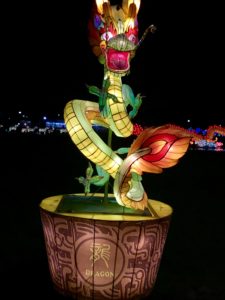
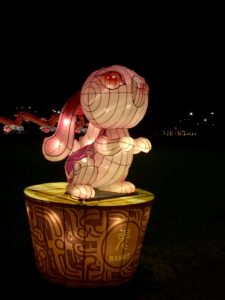
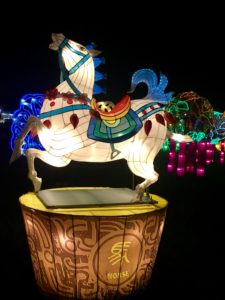
The final lantern display that we came across, as we finished our tour of the festival was the Chinese Zodiacs. Twelve larger than life zodiac animals on pedestals made up this display. Some of the lanterns in this display include a bright green and yellow dragon with a red and orange tail standing on his hind legs, a pink rabbit with long floppy ears flowing off its oversized head with large red eyes perched on its back feet, and a white horse with a blue mane and tail wearing a rainbow-colored saddle prancing around.
One theme that I noticed throughout the festival was the use of fish and other sea life creatures. Their representation is important because so much of the traditional Chinese culture relied on fishing for survival. The pronunciation of fish in Chinese is the same as surplus which meant people could have wealth and food for the upcoming year.
A challenge that I ran into while attending the lantern festival was the size of the crowd in attendance. Even during the last few days of the festival, the gravel path we walked along was packed with people which made it difficult to be able to stop and take notice of some of the lantern displays. I was however surprised that even though there were signs posted to stay on the path, it was not enforced. Many people (including myself) strayed off the path and walked up to many of the lanterns. This allowed for me to take a closer look at the lanterns, where I figured out that each one was made from a heavy translucent vinyl type of material. Their seams were sewn together with an upholstery grade thread. It was quite interesting to learn this, because I had no idea what they would be made out of. Having the opportunity to experience the lantern festival is one that I’m glad I took. It allowed my daughters and me to learn a little bit about a different culture than the one that we were raised in. I wish I had gone earlier during its run and attended once or twice more because I’m sure there are a lot of details that I missed that I would have enjoyed catching on later visits.


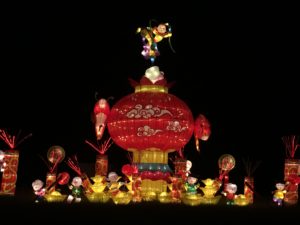 In the evenings between April 14 and June 24, 2017 hundreds, if not thousands of people flocked to the NYS Fairgrounds located in Syracuse, NY in order to attend the
 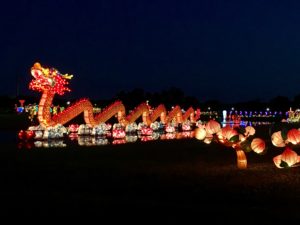 On June 21st, two of my daughters and I headed out to the Fairgrounds, in Syracuse to attend the Festival. Arriving around 8:30 in the evening still allowed enough daylight to watch the stage performances but late enough to enjoy the sculptures fully lit up in the dark. Driving into the parking lot, it was impossible to miss the huge 200-foot lit up orange dragon that appeared to be swimming in the center of a pond. Along the outskirts of the pond, dozens of other lit up animals such as penguins, elephants, and giraffes could be seen.
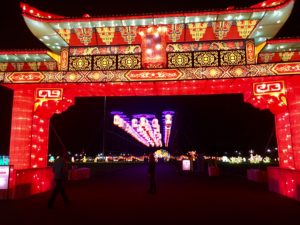 The festival greets its guests as they pass under a giant red welcome gate that resembles a traditional Chinese building. Along with the bright red columns, the gate was decorated with brown, yellow and teal-green designs. Once passing under the welcome gate, visitors walk beneath a corridor of white lanterns with orange foliage painted on them, hanging from rings of purple lights intricately woven into whimsical circles. When walking through this beautiful corridor, it feels as though you’re about to be transported to another world. A colorful field of vibrantly lit decorations lay on the other side of the magical corridor that make it difficult not to get excited about. The mammoth dragon centered in the pond was definitely the largest attention grabber. It’s bright orange body with fire red scales beckons visitors to come to the edge of the pond to see it. To the left of the entrance lays a stage with benches placed in front for audience seating where the nightly acrobatic or plate spinning performances occur.
 These whimsical animals included giant elephants, panda bears, fish, zebras, giraffes, and tigers. Along with the animals, there were lantern gardens of tulips, roses, and cherry blossom trees. All of the lanterns contained meaning within the Chinese culture, which could be read on the informational placards that were posted alongside each
  lantern display. These placards discussed the item on display, its historical value, and it’s meaning in and importance to the culture. Although there were signs posted to stay on the path it was not enforced, making it easy for curious people (such as myself) to walk up to the lantern displays in order to get a better look at the lanterns or to take photos with them. To my surprise the lanterns were made out of a heavy, transparent, vinyl material and sewn together with an upholstery grade thread.
 To help visitors immerse themselves deeper into the culture, there were Chinese food concessions onsite that offered delicious foods such as dumplings, teriyaki, and eggrolls. Artisans also had vending booths set up, selling authentic paper lanterns and stars, fans, and parasols. There was also a booth where guests could get their names written in traditional symbols.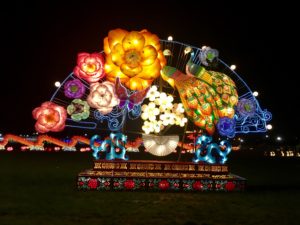
 On July 14th, I attended a rendition of “Snow White and the Seven Dwarfs,” put on by the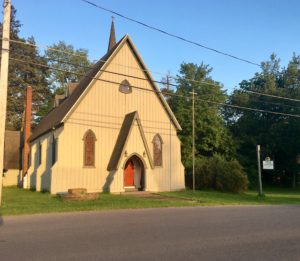
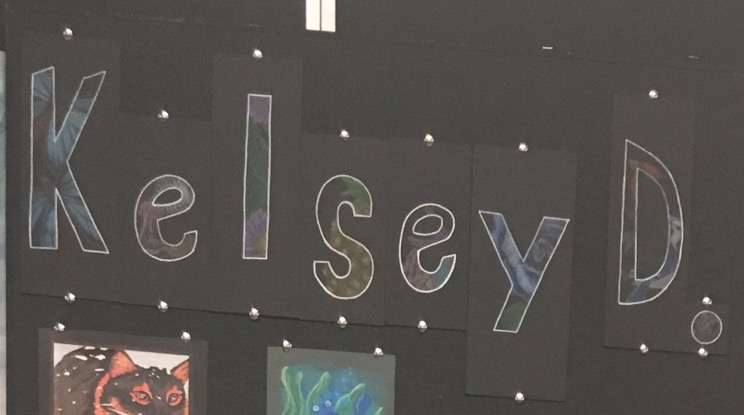 You wouldn’t know that it was a cool and dreary day when stepping into the high school cafeteria. There was a loud chatter of people everywhere that warmed the atmosphere. The room was packed with family members, friends, teachers, and community members- all looking at student artwork. The lunchroom no longer looked like a lunchroom. Instead, it was transformed into a makeshift gallery. six by four foot black felt boards lined the walls. Each board contained dozens of student artworks that ranged from pencil and charcoal drawings to chalkings and paintings. There were tables set up with countless sculptures of metal and ceramics. Other tables were layered with photographs of flowers, sunsets, various objects like pencils and crayons, people and animals. It was exciting to see all of the students’ art work on display for all to see. Above the crowd, I could hear a familiar high pitch laugh. Without seeing her, I knew exactly where my niece was- I’d know her giggles anywhere. I followed the sound of her voice and found myself standing in front of a six foot tall black felt board with a dozen and a half pieces of art, and my niece beaming from ear to ear. This is exactly what I came to see!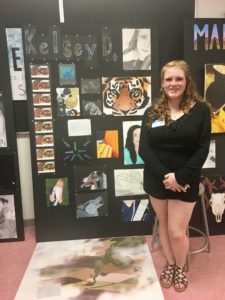
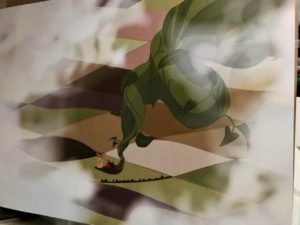 In front of Kelsey’s board, on the floor lay a two by three foot piece of white canvas. On it, a scene of brown and green rolling hills with a beanstalk flowing from the corner, surrounded by white clouds. It was a scene from Jack and the Beanstalk. The piece was designed from the perspective of the giant looking down on Jack as she climbed down to the country side. At first glance, the canvas looked to be painted but after closer examination, I realized that it was a digital rendition of one of her paintings. As it turns out, Kelsey originally drew this design for the school’s Varsity Winter Guard team to use as their floor mat for their performance of Jack and the Beanstalk. I had seen the larger, full size version of this during their performances but never knew she had designed it. Seeing it and putting it together blew my mind!
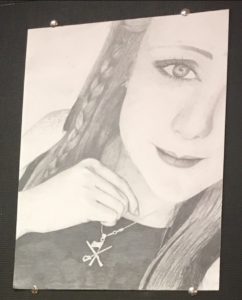 Her ability to shade in even the smallest details such as her eye brows and eye lashes down to the light reflecting from her necklace was amazing. Another self-portrait was displayed in the opposite corner. This one drawn in oil-based chalk was of her and the rifle she spins during Winter Guard performances. Half of her face is hidden behind the butt of the bright white riffle, but looking in her eyes it’s clear that she is smiling. A pencil drawing of a broken light bulb was displayed below a portrait of a girl with long brown hair putting on stage makeup. As I looked at this painting, I noticed the smallest details that Kelsey managed to include, such as the girl’s stray curls in her hair and the wrinkles in her sky blue shirt. Mindfully scattered on the board were pictures of different animals that Kelsey drew. Elephants, leopards, dogs, and wolves; but the most prominent one was of a tiger.
 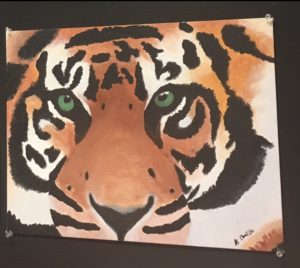 The orange, white, and black face took up the entire piece. Its stripes perfectly spaced around his nose and bright green eyes that pulled you in and held your attention. If you stared for too long, you could easily forget that you were looking at a piece of 8 by 11 card stock and water colors. Viewing her display, it was easy to see what Kelsey valued most.
 It’s difficult to walk around our little town without hearing about something that Marge has done for our community, so it’s no surprise to hear that she pretty much runs the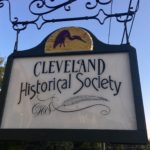


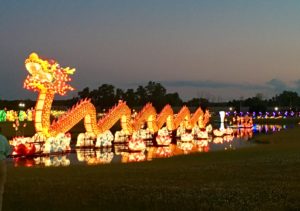 When I heard that the Chinese Lantern Festival was coming to the NYS Fairgrounds, I knew I had to check it out! Traditionally, the Chinese Lantern Festival takes place at the end of the Chinese Spring Festival (aka Chinese New Year Festival), on the night of the first full moon of the Chinese calendar (typically in February or March). The exhibit set up at the State Fairgrounds ran from April 14 through June 24, 2017 which allowed visitors 2 months to attend and appreciate the history behind the larger than life lanterns. The festival consisted of more than 30 lit up displays aligned along a mile-long path around a small pond that attendees could walk, take photos, and read informational placards in order to learn more about the significance of some of the lantern displays. There are also nightly stage performances that consist of acrobatic contortion, plate spinning, and face changing.
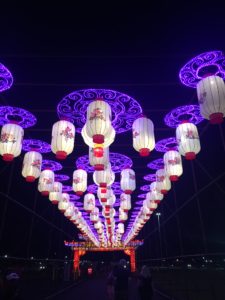 When walking through this beautiful corridor, it feels as though you’re about to be transported to another world. A colorful field of vibrantly lit decorations lay on the other side of the magical corridor that make it difficult not to get excited about. The very first thing that grabs your attention again is the mammoth dragon in the middle of the pond. It’s bright orange body with fire red scales beckons visitors to come to the edge of the pond to see it. Before we could get pulled into its mesmerizing trance, we were distracted by the sounds of what I’d consider to be traditional Chinese music and the applause of an audience. To our left, was a brightly lit stage, surrounded by a crowd of people. On the stage were five dark haired, petite women dressed in teal and white bodysuits with their hair tied back into perfectly neat buns. Each woman held three long sticks in each of their hands with plates spinning on each one.
 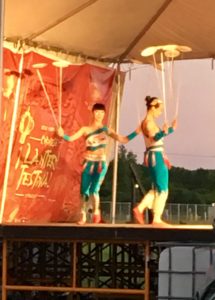 At first, the performers spun their plates as they moved in a choreographed routine, walking around each other in various formations. Soon after, the women turned their dance into a tumbling routine as one performed slow summersaults while still spinning her plates. She then handed her plates to another performer and proceeded to climb onto the shoulders of two of the other performers as they spun their plates. It was mind blowing! The crowd loved it as they cheered louder and louder with each trick. I
 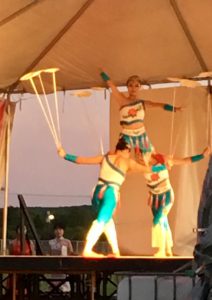 studied the plates as they appeared to wobble on the sticks. I thought that there was no way they were actually spinning these plates… they had to be attached and the performers were simply shaking the sticks to appear as though they were spinning. How else could they continue to spin their plates and hold the weight of another person, as if she weighed nothing? At the end of the performance, the women took a bow and as if they knew what I was thinking, tilted their sticks down so that the plates would tumble to the floor of the stage- proving me wrong.
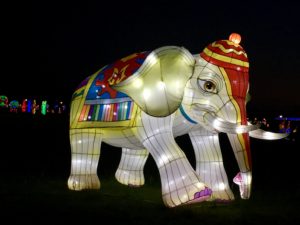 As we traveled the path around the pond, we came across life-size elephants (representing good luck), all wearing various brightly colored hats and blankets as saddles, and then a waddle of gold, brown, and white penguins that looked as if they wanted nothing more than to play with each passerby. Once passing by the penguins, we came to the front of the mighty dragon again.
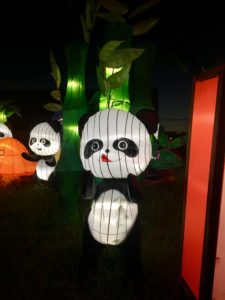 Pandas are highly treasured in China and are considered to spread the friendship of the Chinese people around the world. This display contained a group of large and small pandas playing together in a fairytale like land with mushroom housing, colorful bamboo trees, and a rainbow that they teeter tottered under. The artists that designed this display wished to show the natural beauty of pandas. Observing this display, it was hard not to smile as we constantly pointed out all the cute things each panda was doing.