
I chose my summary heuristic for Guilty Pleasures, a chapter from Rick Moody’s book “On Celestial Music and Other Adventures in Listening,” because the formatting of the text was initially difficult for me to understand. A lot of the text was written to mimic a string of email conversations which was at times, confusing to follow. Writing a summary heuristic for Moody’s chapter helped me to see beyond the email conversations, and allowed me to examine the author’s meaning behind the text.
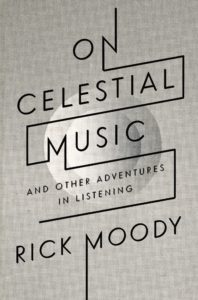
Guilty Pleasures, a chapter from the book “On Celestial Music and Other Adventures in Listening,” written by Rick Moody is about an event that the Brooklyn Record Club (whom Moody is a member of) is planning to put on where each member is required to bring two musical selections that they are ashamed of liking. The author uses saved email conversations between the members to outline the event and the feelings that bringing such selections invite. The book was published in New York on January 1, 2012, by Back Bay Books- a subdivision of Little, Brown and Company.
This chapter can be described as a personal narrative because Moody writes about an event in a story format that happened in his life. His primary audience are readers with a broad appreciation for music. This is apparent by the depth the author goes into while describing the various musical genres throughout the chapter. His secondary audience might be those faced with having to make decisions that may cause discomfort, which can be recognized throughout the chapter as Moody discusses the difficulty he has deciding on which songs to bring to the Guilty Pleasures event.
In this piece, Moody is being nostalgic as he discusses music from his past and the feelings it incurs. Moody uses both ethos and pathos to convey his purpose. He uses ethos to show the creditability of his vast knowledge of music. One example of him doing this is when he writes about working at a radio station during one point of his life: “I worked at the radio station when I was in boarding school. I may even have been the program director of the school radio station,” (Moody, 149). He uses pathos to appeal to the audience’s emotions and values. This is done by showing how difficult it was for him (and other members of the Record Club) to decide which tracks to play during the Guilty Pleasures event. He also talks about his sense of nostalgia when picking the Jethro Tull track, which was in part inspired by his late sister’s fandom of Tull.
One concept that resonates within the text is nostalgia. This can be seen throughout the chapter as Moody discusses various music that he and the other members liked at specific points of their lives. One example was in JL2’s email message that she sent after FT had stated that “We Built This City on Rock ‘n Roll” would always be an abomination: “I remember performing ‘we built this city’ on WFMU in the mid eighties. Everyone was smiling broadly and there was a general vibe that it was the best part of the evening.”
A second example can be found as Rick Moody discusses how he took possession of some of his late sister’s CDs after she passed away. In the chapter, he states that she was a fan of Jethro Tull’s live album, Bursting Out. “I’d never much liked Bursting Out back when it was released, but when it was my late sister’s album, it suddenly seemed worth another listen.” Moody continues by saying that listening to that album made him want to listen to other albums from Jethro Tull’s earlier years.
Another concept that can be found within the chapter are concerns of feeling insecurity, discomfort, and embarrassment. One example of how this is felt is when Moody discusses how the two selections he brought to the first Record Club meeting that he attended (songs from Meredith Monk and Captain Beefheart), did not translate his musical tastes the way he had hoped. Moody states: “The Beefheart debuted first, and I was red with embarrassment and anxiety, my head actually in my hands throughout its performance.” He goes on to say how the Guilty Pleasures event provoked the same insecurities and discomfort: “playing really awful stuff in front of very accomplished persons, many of whom I not only like personally but also admire, was difficult.”
Moody ends the chapter by saying that choosing the tracks that he did, indeed caused himself discomfort before and after the event, but as time passed he was able to move past feeling awful about it. The circulation of this piece, at this time during our class is opportune because we may be feeling insecure or uncomfortable about sharing our writing as we prepare to write about our first arts experience. Moody’s chapter helps us to see the importance of sharing our experiences despite our insecurities and feelings of discomfort, and the courage it takes to do so.