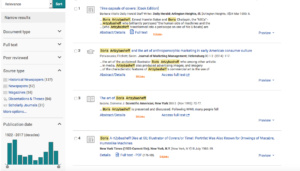
The biggest challenge I had was figuring out how to make my Art Review read more like a review and less like an encounter. I wanted to add a lot of detail to make my audience feel as if they were experiencing the Art themselves, but was challenged to find the wording to make it sound like a review. I read multiple reviews for reference but still feel as though I’ve come up short on the assignment. I was surprised to realize that I enjoyed completing the research for my projects and the smaller weekly assignments because it gave me an opportunity to learn and expand my knowledge on things that I may not have already known. An example of this was with my research on Boris Artzybasheff and his graphic work. As stated in my project, I didn’t really know who he was or what his work was when I attended the lecture at the SUArt Galleries. Researching him as an artist and the work he did allowed me the opportunity to understand the meanings behind his artwork. I was also able to learn more about the use of Propaganda during times of war such as WWII. These experiences are important to my development as a research writer because they allow me to learn and continuing expanding the skills learned during the semester. In the future, I will be able to fall back on information learned, such as how to search the library’s databases for scholarly articles to help back up arguments I may be trying to make.
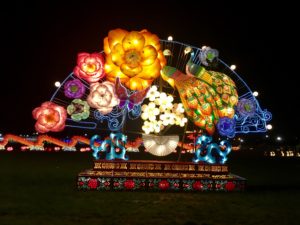
Research and writing impacted my engagement, interest, and understanding as I worked with the Encountering Arts inquiry in that it forced me to look at Art more critically and with purpose instead of just for aesthetic purposes. Before taking WRT 205, I would encounter Art for the sole purpose of seeing it. Now I am able to experience Art with the intention of thinking deeper about its meaning and what the artist wanted to draw attention to with it. An example of this is the New York State Chinese Lantern Festival. It would be simple for me to attend with the intent of simply enjoying the displays. Instead, I had the foresight to research the event, what it took in order to set up the displays, and the importance of the festival in the Chinese culture. Afterwards, I researched the importance of the various themes I noticed throughout the festival and the importance of them in the Chinese culture.
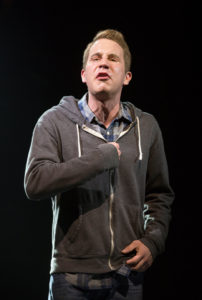
The project that I hope others will read and be influenced by is my Unit One project: Researching & Analyzing an Arts Experience that I submitted on Boris Artzybasheff. This was by far, my favorite project that I submitted because his work was so unique and I enjoyed learning how his work was used as propaganda during war times and the technological era. The Interviews that we read throughout the semester were most influential and helpful to me and my work as a research writer as I prepared for my interview with Marge Thomas and her work with the Children’s Glassworks Theatre. Reading the different interviews allowed me to see many different styles and formats that others have published. I was also able to get an idea of the types of questions to ask and how to make them flow well. Many of the interviews that I read were in a blog format, which is the formatting that I chose to use as well. I was able to mimic ideas that I liked from the interviews in order to use in mine.
This semester was the first time that I have taken a class where I have really learned or needed to complete research for any assignments. As I progress through coursework towards my degree, I image there will be many classes where the practices I’ve learned will benefit me as I need to read and complete research for papers and assignments. Completing database searches in order to find scholarly works that will support any arguments that I may make in my writing will be beneficial so that I have critical engaging examples to use. I will also use the practice of completing summary heuristics in order to examine texts more critically. This practice will help me to dissect the texts in a way that will allow me to find the authors’ purpose for writing them.
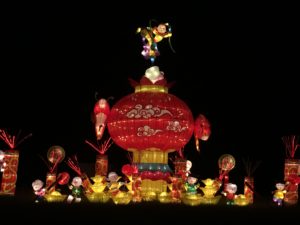 In the evenings between April 14 and June 24, 2017 hundreds, if not thousands of people flocked to the NYS Fairgrounds located in Syracuse, NY in order to attend the
 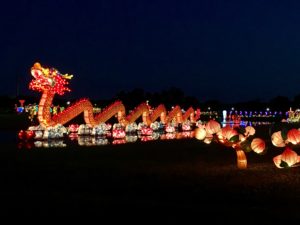 On June 21st, two of my daughters and I headed out to the Fairgrounds, in Syracuse to attend the Festival. Arriving around 8:30 in the evening still allowed enough daylight to watch the stage performances but late enough to enjoy the sculptures fully lit up in the dark. Driving into the parking lot, it was impossible to miss the huge 200-foot lit up orange dragon that appeared to be swimming in the center of a pond. Along the outskirts of the pond, dozens of other lit up animals such as penguins, elephants, and giraffes could be seen.
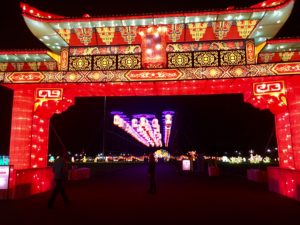 The festival greets its guests as they pass under a giant red welcome gate that resembles a traditional Chinese building. Along with the bright red columns, the gate was decorated with brown, yellow and teal-green designs. Once passing under the welcome gate, visitors walk beneath a corridor of white lanterns with orange foliage painted on them, hanging from rings of purple lights intricately woven into whimsical circles. When walking through this beautiful corridor, it feels as though you’re about to be transported to another world. A colorful field of vibrantly lit decorations lay on the other side of the magical corridor that make it difficult not to get excited about. The mammoth dragon centered in the pond was definitely the largest attention grabber. It’s bright orange body with fire red scales beckons visitors to come to the edge of the pond to see it. To the left of the entrance lays a stage with benches placed in front for audience seating where the nightly acrobatic or plate spinning performances occur.
 These whimsical animals included giant elephants, panda bears, fish, zebras, giraffes, and tigers. Along with the animals, there were lantern gardens of tulips, roses, and cherry blossom trees. All of the lanterns contained meaning within the Chinese culture, which could be read on the informational placards that were posted alongside each
  lantern display. These placards discussed the item on display, its historical value, and it’s meaning in and importance to the culture. Although there were signs posted to stay on the path it was not enforced, making it easy for curious people (such as myself) to walk up to the lantern displays in order to get a better look at the lanterns or to take photos with them. To my surprise the lanterns were made out of a heavy, transparent, vinyl material and sewn together with an upholstery grade thread.
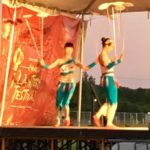 To help visitors immerse themselves deeper into the culture, there were Chinese food concessions onsite that offered delicious foods such as dumplings, teriyaki, and eggrolls. Artisans also had vending booths set up, selling authentic paper lanterns and stars, fans, and parasols. There was also a booth where guests could get their names written in traditional symbols.