
Another smaller assignment that I’m including in my portfolio is entitled: “Ringing the Freedom Bell” & Source Ideas. This assignment was intended to help us think about sourcing and research for our Arts Review. Our assignment required us to think about the kind of research Erica Armstrong Dunbar was required to do and the sources she may have used to write her article: “Washington’s New African-American Museum Shows How Black History Shaped the American Experience,” which was published in The Nation. Initially, I was planning to review my experience of watching a local children’s theatre’s performance of “Snow White and the Seven Dwarfs,” so I discussed the kind of research I could do. Later, I chose to review a different experience.
“The bell, which dates back to 1886, was owned by the First Baptist Church in Williamsburg, Virginia, a congregation founded by enslaved and free blacks in 1776. The same year that the founders of the new nation signed the Declaration of Independence, members of the First Baptist Church defied the law by congregating and worshipping in secret outdoor church services. It seems that in 1776, the spirit of freedom was contagious.”
In Dunbar’s article, she discusses how President Obama spoke at the opening of the Smithsonian’s National Museum of African American History and Culture. After his opening remarks, the President, first lady, and Ruth Bonner would then ring the Freedom Bell together. Dunbar most likely researched the history of the Freedom Bell and the origins of the First Baptist Church using historical documents maintained by the First Baptist Church or the municipal of Williamsburg, Virginia.
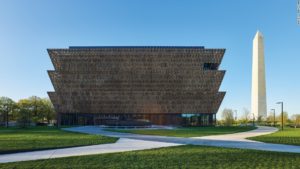
“Once inside, the visitors are captivated by what they see. They move slowly and judiciously through the multilevel structure, carefully reading the descriptions for each object. They match images and items to family stories passed down from one generation to the next. In many ways, this museum validates what these visitors have always known to be true. The experience is both educational and emotional, and the patrons refuse to be rushed. The typical time spent in a museum is close to two hours, but the people who visit here are staying for much longer, sometimes for up to six hours. They photograph themselves in front of exhibits that are particularly moving or triumphant; they fall into silence when they ponder a set of children’s shackles.”
Dunbar could have performed both primary and secondary research as she speaks of the visitors and the amount of time spent inside of the museum. It’s possible that she witnessed the visitors as they traveled throughout the museum, noting their reactions to the exhibits and interactions with one another. Dunbar links to an article on NPR which suggests that she used it as secondary research.
While reviewing my experience of a performance of “Snow White and the Seven Dwarfs,” a play recently put on by the Children’s Glassworks Theatre, I would research the history of the theatre and the decommissioned church that the theatre is housed in. It’s owned by the Cleveland (NY) Historical Society so I could reference historical documents that the village has on file. I could also speak with members of the Cleveland Historical Society, as they have lived in our village for many generations and would be a wealth of knowledge.